

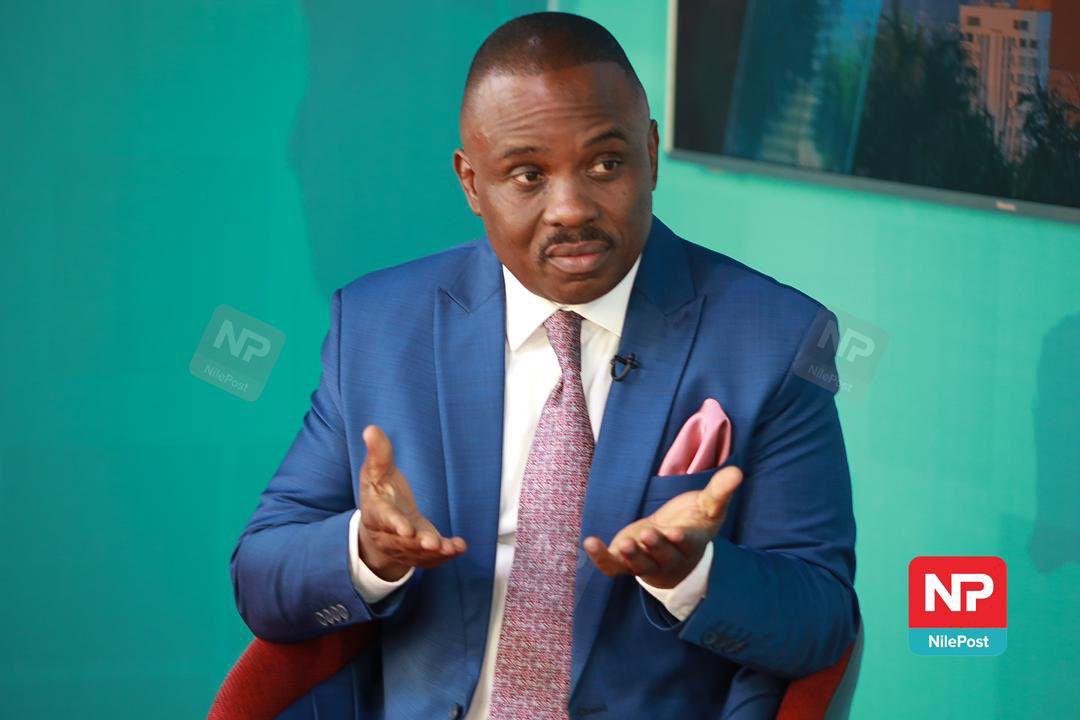
The People’s Front for Freedom (PFF) president, Erias Lukwago, has revealed that the party will not join the Inter-Party Organisation for Dialogue (IPOD), despite qualifying for membership after securing representation in the 12th Parliament.
PFF, which was formed in 2025 ahead of the 2026 general elections, fronted several candidates across the country, particularly in parliamentary races, but only secured two seats — the Woman MP for Hoima City and the Gulu City Woman MP seat currently held by Asinansi Nyakato and Betty Aol Ochan respectively.
Under current legal and political arrangements, parties represented in Parliament are eligible — and in some cases expected — to participate in IPOD, a platform designed to facilitate dialogue among political parties.
However, Lukwago said PFF will not be part of the organisation, which he claims has deviated from its original purpose.
Speaking to Nile Post, Lukwago described IPOD as having “lost track” of its founding objectives, arguing that it was initially meant to help steer democratic transition and structured political dialogue but has since turned into what he termed a “cash bonanza venture.”
“It instead has turned into a cash bonanza venture where people meet to share money. We can’t join such as PFF,” Lukwago said.
IPOD was initially formed as a dialogue platform for political parties and has since been formalised within Uganda’s political governance structure. Amendments to the Political Parties and Organisations Act in 2025 strengthened its role and tied government funding for political parties to participation in the platform.
The law effectively means that government funding and other public resources are limited to parties that are members of and actively participate in IPOD.
The amendments also integrated IPOD as an organ under the National Consultative Forum (NCF), expanding its role in conflict mitigation, dispute resolution, and policy consultations among political actors.
Lukwago said PFF intends to challenge what he described as the “wrong and illegal” integration of IPOD into the National Consultative Forum following the amendments to the law.
The PFF president maintains that while the NCF is recognised under the law, the process through which IPOD became embedded within it raises legal and constitutional questions that his party intends to contest in court.
His position adds to the broader political debate around IPOD, with several opposition actors previously expressing concerns about its structure, funding framework, and perceived political neutrality.
PFF has previously expressed reservations about IPOD, with Lukwago in earlier interviews saying the platform had outlived its usefulness and no longer serves as a genuine vehicle for meaningful political reforms.
IPOD itself dates back to 2009 and was designed to create structured dialogue among political parties to reduce conflict and promote democratic engagement.
With the new legal framework linking state funding to IPOD participation, political parties that decline to join risk losing access to government facilitation funds allocated to parties represented in Parliament.
However, Lukwago signalled that PFF is willing to take that risk as it pushes its legal challenge and political position against the platform.
PFF’s position mirrors long-standing resistance by the National Unity Platform (NUP), Uganda’s largest opposition party, which has repeatedly declined to join IPOD despite legal and financial implications.
NUP officials have previously said the party will not be coerced into joining the dialogue platform, even when faced with threats of losing government political funding tied to IPOD membership.
Party leaders have argued that attempts to force them into the forum amount to political blackmail.
The party has also publicly maintained that it does not associate with IPOD and is unwilling to participate in what it describes as forced political dialogue, even after legal amendments tied statutory funding for political parties to IPOD participation.
Court proceedings and government directives following the 2025 amendments to the Political Parties and Organisations Act further reinforced the link between IPOD membership and access to state funding.
Courts have noted that NUP had consistently distanced itself from IPOD activities, a factor that contributed to its exclusion from public financing allocated to political parties.
NUP has instead pursued legal challenges against the funding framework and government directives, arguing that the IPOD-linked funding model is unconstitutional and discriminatory against parties that choose not to participate in the platform.
